ALLEN BRADLEY 4100-232-L Axis Servo Controller
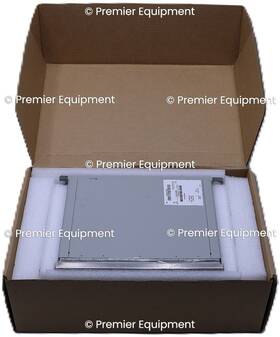
( Brand: Allen Bradley ), ( Manufacturer Part Number: 4100-232-L ), ( Part Type: Servo Controller )
Review ALLEN BRADLEY Ser Axis Servo Controller
The **Allen-Bradley 4100-232-L Axis Servo Controller** is a high-performance, modular servo drive designed to deliver precise motion control in industrial automation applications. Part of Rockwell Automation s **PowerFlex 4100** series, this compact yet robust controller is engineered to interface seamlessly with servo motors, enabling smooth, accurate positioning and velocity control for a wide range of machinery from packaging and material handling systems to robotics and CNC applications. With its **L-series** designation, this unit is optimized for **local or remote mounting**, offering flexibility in system integration while maintaining robust connectivity through **EtherNet/IP, DeviceNet, and ControlNet** communication protocols. The controller features **closed-loop control algorithms** that minimize overshoot, reduce settling time, and enhance overall system responsiveness, making it ideal for applications requiring high-speed, repeatable motion profiles.
Built with **industrial durability** in mind, the 4100-232-L is constructed from high-quality materials to withstand harsh environments, including temperature fluctuations, vibration, and electrical noise. Its **compact, DIN-rail-mountable design** allows for efficient space utilization in control panels, while its **user-friendly interface** simplifies configuration and troubleshooting through **RSLogix 5000 or Studio 5000 software**, enabling engineers to program motion sequences, set velocity and acceleration profiles, and monitor performance in real time. The unit supports **scalable current ratings** (up to **232 amps per phase**), making it suitable for driving high-power servo motors without compromising on precision. Additionally, its **integrated diagnostics** provide detailed feedback on motor health, fault conditions, and operational efficiency, reducing downtime and maintenance costs.
Beyond its technical capabilities, the 4100-232-L excels in **scalability and integration**, allowing it to work alongside other **PowerFlex 4100** drives or **Kinetix servo drives** within a unified control architecture. Its **EtherNet/IP compatibility** ensures seamless communication with **Allen-Bradley PLCs, PACs, and HMI systems**, enabling centralized motion control and synchronization across multiple axes. Whether deployed in a **single-axis application** or as part of a **multi-axis coordinated system**, this servo controller delivers **consistent, high-precision motion control** with minimal tuning effort. For industries prioritizing **reliability, efficiency, and adaptability**, the 4100-232-L serves as a dependable foundation for next-generation automation solutions.
### **Pros and Cons of buying a Allen-Bradley 4100-232-L Axis Servo Controller**
#### **Pros:**The **Allen-Bradley 4100-232-L** is a high-performance servo controller designed for industrial automation applications, particularly in motion control systems. Its key advantages include:
1. **High-Speed Processing & Precision Control**
The 4100 series is built on a robust, deterministic control platform with high-resolution positioning capabilities. It supports advanced motion algorithms, including velocity, position, and torque control, making it suitable for complex applications like CNC machining, robotics, and packaging systems.
2. **Scalability & Modularity**
The controller integrates seamlessly with other **Rockwell Automation** components (e.g., PLCs, HMI systems, and drives) via **EtherNet/IP**, **DeviceNet**, or **ControlNet**. This modularity allows for easy expansion of motion control axes without significant system redesign.
3. **Deterministic Communication**
EtherNet/IP provides low-latency, real-time communication, which is critical for synchronized multi-axis motion control. This ensures smooth coordination between servo drives, PLCs, and other devices, reducing missed deadlines in high-speed applications.
4. **Support for Advanced Motion Functions**
The controller includes built-in support for **s-curves, velocity profiling, cam profiles, and synchronized multi-axis motion**, which are essential for applications requiring smooth acceleration/deceleration, precise sequencing, or coordinated movements.
5. **Reliability & Industrial-Grade Build**
As part of Rockwell Automation s **CompactLogix/ControlLogix** ecosystem, the 4100 series is designed for harsh industrial environments, with features like **wide temperature ranges, EMI/EMC shielding, and robust mounting options**.
6. **Compatibility with Allen-Bradley Drives**
It works natively with **PowerFlex 755/757 servo drives**, ensuring optimized performance, reduced latency, and simplified tuning. This compatibility reduces integration challenges compared to third-party solutions.
7. **Programmable Logic & Diagnostics**
The controller can be programmed using **RSLogix 5000 or Studio 5000**, allowing for custom motion logic, fault diagnostics, and predictive maintenance features. Built-in diagnostics help identify issues like drive misalignment, overheating, or communication errors.
8. **Long-Term Support & Availability**
Rockwell Automation maintains extensive documentation, training, and technical support for the 4100 series. Since it is part of a widely used industrial automation platform, spare parts and firmware updates are readily available.
9. **Cost-Effective for High-Volume Applications**
While the initial cost may be higher than some competitors, its **efficiency, longevity, and reduced downtime** often justify the investment in large-scale industrial setups.
---
#### **Cons:** Despite its strengths, the **4100-232-L** has some limitations that may affect certain applications:1. **Higher Upfront Cost**
Compared to some **open-source or third-party servo controllers**, the 4100 series can be expensive, particularly for small-scale or research-oriented projects. The cost includes not only the controller but also the need for compatible drives and programming software.
2. **Vendor Lock-In**
Rockwell Automation s proprietary ecosystem means that users are tied to **Allen-Bradley components** for optimal performance. Switching to other brands (e.g., Siemens, Bosch Rexroth, or Beckhoff) may require additional hardware and reprogramming.
3. **Complexity for Beginners**
The **Studio 5000/RSLogix 5000** software has a steep learning curve, especially for users unfamiliar with **ladder logic (Ladder) or structured text (ST)**. Configuration and troubleshooting require expertise in industrial automation programming.
4. **Limited Analog/Digital I/O on the Controller**
The **4100-232-L** is primarily a **motion controller** and does not include extensive **general-purpose I/O**. For applications requiring high counts of digital or analog signals, additional **CompactLogix or ControlLogix modules** may be needed, increasing system complexity.
5. **Firmware & Software Dependencies**
The controller relies on **Rockwell s software ecosystem**, which may not always be up-to-date with the latest motion control trends. Users must ensure compatibility between **firmware versions, drive firmware, and PLC logic**.
6. **Physical Size & Space Requirements**
The **4100 series** is a **rack-mountable unit**, which may not be ideal for space-constrained applications. Smaller, more compact alternatives (e.g., some **Beckhoff or Siemens controllers**) may be preferable in tight installations.
7. **Potential Latency in Non-Deterministic Networks**
While **EtherNet/IP** is deterministic for motion control, other non-real-time protocols (e.g., standard Ethernet) may introduce delays if not properly configured. This can be a concern in ultra-high-speed applications.
8. **Limited Open-Source or Customization Options**
Unlike **open-source motion controllers (e.g., LinuxCNC or EtherCAT-based systems)**, the 4100 series offers **limited flexibility for custom firmware or algorithm modifications**. Users are constrained by Rockwell s proprietary environment.
9. **Training & Support Costs**
Proper configuration and troubleshooting often require **certified Rockwell Automation training**, which can be an additional expense. Smaller companies may lack in-house expertise, leading to reliance on external consultants.
10. **Deprecation Risk Over Time**
While still supported, **Rockwell Automation is gradually shifting focus toward newer platforms** (e.g., **Studio 5000 Logix Designer, CompactLogix, or Micro800**). Future-proofing may require migration to newer controllers in long-term projects.
---
### **Conclusion & Recommendation**
#### **When to Buy the Allen-Bradley 4100-232-L:**- **Best for:** Large-scale industrial automation where **deterministic motion control, scalability, and Rockwell Automation ecosystem integration** are critical.
- **Ideal applications:**- **CNC machining centers** (multi-axis synchronized movements)
- **Robotics & automated assembly lines** (precise, repeatable motion)
- **Packaging & material handling systems** (high-speed, coordinated axes)
- **Process industries** (pump control, conveyor synchronization)
- **Existing Rockwell Automation installations** (seamless integration with PLCs, HMIs, and drives)
#### **When to Consider Alternatives:**- **For smaller or research-oriented projects** where cost is a major concern, **open-source or third-party controllers** (e.g., **Beckhoff TwinCAT, Siemens Sinamics, or LinuxCNC**) may offer better value.
- **For applications requiring extensive I/O or analog signals**, a **CompactLogix or ControlLogix PLC with motion extensions** might be more versatile.
- **For ultra-high-speed or ultra-precise applications**, **EtherCAT-based systems** (e.g., **Beckhoff, B&R**) may provide lower latency and better real-time performance.
- **For users unfamiliar with Rockwell software**, alternatives like **Siemens TIA Portal or Codesys** (with motion extensions) may have a gentler learning curve.
#### **Final Recommendation:**The **Allen-Bradley 4100-232-L** is a **strong choice for industries that rely on Rockwell Automation s ecosystem**, particularly in **high-performance motion control applications**. Its **deterministic communication, scalability, and integration with PowerFlex drives** make it a reliable option for **large-scale, mission-critical systems**.
However, if **cost, flexibility, or ease of use** are prioritized over brand loyalty, exploring **Beckhoff, Siemens, or open-source alternatives** may yield better long-term benefits. Always evaluate the **total cost of ownership (TCO)**, including **training, maintenance, and future-proofing**, before making a decision.
For most **industrial automation environments where Rockwell components are already in use**, the **4100-232-L remains a solid, battle-tested solution**. For other cases, a **detailed comparison with competing products** based on specific application requirements is advisable.
Details:
MPN: 4100-232-L. Refurbished unit. Consignor: 5-19-2026 PES j. Comes as shown in the pictures.
Replacement identification label on the item. 90-130/175-260 VAC, 50/60 HZ. Brand: ALLEN BRADLEY.
part #: 4100232 prices
- $1199.99-$3985.00
specifications variablfrequen:
- brand: Allen Bradley
- mpn: 4100-232-l
- part type: Servo Controller
general variablfrequen:
- condition: Seller refurbished
- Drives Starters > Drives Motor Controls > Variable Frequency Drives
shipping variablfrequen:
- class: Expedited
- cost: $0.00
- type: Fixed
- transit: 3-8 Days
- service: Expedited
payments variablfrequen:
- credit card: Diners-club
- other
- wallet: Paypal
seller variablfrequen:
- rating: 99.8%
- # reviews: 12222
- city: Rutherfordton, North Carolina
offer variablfrequen:
- options: Ship-to-home
- started: May 20, 2026
- sold: 0
- availability: In Stock
- quantity: 1
returns variablfrequen:
- paid by: Buyer
- method: Money back
- policy: Returns Accepted
- time: 30 Days
Allen Bradley 4100-232 Is Similar To:
- 00885630702490 Allen Bradley Power Flex Ac Drive Phase Sealed (45.2% similar) I took these pics of the actual drive from our spare...(January 14th, 2019)
- 0ad022a3aynanco Allen Bradley Powerflex Parts Or Repair As Is (33% similar) Its untested, sold for parts or repair and as is. Power flex 70 20AD022A3AYNANCO. I'm not the previous owner and I have no knowledge of this item...(March 2nd, 2019)
- 104-c09d22 Allen Bradley 9 Amp Reverse (43.5% similar) Key features. Allen Bradley 9 reverse contractor 1PC, model 104-C09D22 100 new...(February 12th, 2017)
- 105062 Allen Bradley Drive Transducer Talema (40.8% similar) Part number free shipping H-H128 box. Used working Allen Bradley 1335 drive transducer...(August 11th, 2018)
- 1201-ha1 Allen-bradley Allen Bradley Programming (33.3% similar) ...(September 4th, 2017)
- 1203-sm1 Lot Of Cards Allen Bradley Slc (34.4% similar) These were taken from working machine and are now offered to you. Doing a clear out of inventory ,selling these cards together...(February 15th, 2019)
- 1203-sss Ser B Allen-bradley Powerflex Rs232 (30.6% similar) Item appears to be new but I can't guarantee this since received as part of a lot...(February 9th, 2017)
- 1203-usb Allen-bradley Communication Adapter For (35.3% similar) They only come by themselves no cables. These are used 1203-USB modules...(January 28th, 2018)
- 123969 Allen Bradley Drive Transducer Talema (40.8% similar) Used working Allen Bradley 1335 drive transducer. Free shipping H-H128 box part number...(August 11th, 2018)
- 1305-aa04a Allen-bradley Adjustable Frequency Ac (35.3% similar) There is a shipping costs are determined by the location of buyer and weight item sold. Item details: approx dimensions: do not forget about any other charges which are charged by the carrier. For thousands of other industrial items. Allen-bradley 1305-AA04A adjustable frequency ac drive 1HP 230V ...(April 28th, 2017)
- 1305-aa04a-es Allen-bradley Adjustable Freq Ac (36% similar) For thousands of other industrial items. Allen-bradley 1305-AA04A-ES adjustable freq ac drive 1HP 1700VA 230V this is used. It does not have the programming terminal. Shipping costs are determined by the location of buyer and weight item sold. There is a do not forget about any other charges which ...(June 7th, 2017)