ABB ACS800-ITTU1-0030-5 Frequency Drives B056 P901
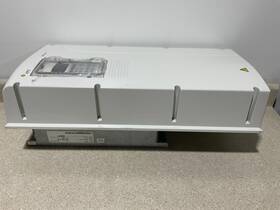
( Brand: Abb ), ( Manufacturer Part Number: ACS800-ITTU1-0030-5 ), ( Part Type: Drive )
Review ABB
The **ABB ACS800 ITTU1-0030-5 B056 P901** is a high-performance, modular industrial touchscreen operator terminal designed for seamless integration into ABB s ACS800 drive system, offering advanced human-machine interface (HMI) capabilities tailored for demanding automation applications. This compact yet robust device features a **5-inch capacitive touchscreen** with a high-resolution display, providing crisp visuals and intuitive navigation for real-time monitoring and control of motor-driven systems. Engineered with industrial durability in mind, the ITTU1-0030-5 is built to withstand harsh environments, including temperature fluctuations, humidity, and mechanical stress, making it ideal for factory floors, process industries, and other challenging operational settings.
The terminal operates on ABB s **ACS800 Drive System**, leveraging the same intuitive software platform as the ACS800 drives, ensuring a unified control experience across the entire automation ecosystem. Its **B056 firmware version** and **P901 hardware revision** indicate a refined and optimized configuration, supporting advanced features such as **multi-language support, customizable dashboards, and integrated diagnostics tools**. The device allows operators to configure and adjust drive parameters, monitor performance metrics, and troubleshoot issues directly from the touch interface, reducing downtime and enhancing efficiency. Additionally, the ITTU1-0030-5 supports **modbus communication protocols**, enabling seamless integration with third-party SCADA systems, PLCs, and other industrial networks for comprehensive process automation.
Beyond its functional capabilities, the ITTU1-0030-5 is designed with **ergonomic usability** in mind, featuring a responsive touch interface that minimizes operator fatigue during extended use. Its **compact and wall-mountable form factor** optimizes workspace efficiency, while the **backlit display** ensures visibility even in low-light conditions. The terminal also incorporates **security features**, including password protection and role-based access control, to safeguard critical system configurations from unauthorized modifications. Whether deployed in a manufacturing plant, a building automation system, or a renewable energy application, this operator terminal delivers a blend of reliability, flexibility, and user-centric design, making it a versatile solution for modern industrial control requirements.
### **Pros and Cons of buying a ABB ACS800-ITTU1-0030-5 (B056 P901)**
#### **Pros**
1. **High Performance and Reliability** The ABB ACS800 is a robust industrial automation controller known for its high-speed processing, deterministic performance, and reliability in harsh environments. It is widely used in applications requiring precise control, such as motion control, process automation, and machine automation.
2. **Scalability and Flexibility** The system supports modular expansion, allowing users to integrate additional I/O modules, communication interfaces, and advanced control functions as needs evolve. This makes it suitable for both small and large-scale automation projects.
3. **Deterministic Motion Control** The ACS800 is designed for high-performance motion control applications, offering sub-microsecond cycle times and seamless synchronization of multiple axes. This is critical for applications like robotics, CNC machines, and packaging systems.
4. **Redundancy and Fault Tolerance** The system supports hot-swappable components and redundant configurations, minimizing downtime in critical applications. This is particularly valuable in industries where continuous operation is essential, such as manufacturing or energy.
5. **Integration with ABB s Ecosystem** The ACS800 is part of ABB s broader automation suite, which includes software like **ACS Motion Control, Drive Studio, and FactoryTalk View**. This integration simplifies programming, monitoring, and maintenance, as users can leverage familiar tools and protocols.
6. **Long-Term Availability and Support** ABB has a strong reputation for supporting legacy products, and the ACS800 is still actively maintained. This reduces the risk of obsolescence compared to some competitors whose products may become discontinued sooner.
7. **Energy Efficiency** ABB s controllers are designed with energy-saving features, such as optimized control algorithms and support for variable frequency drives (VFDs), which can reduce power consumption in motor-driven systems.
8. **Global Support and Service Network** ABB has a widespread service and support network, ensuring access to technical assistance, spare parts, and training worldwide. This is beneficial for large-scale deployments or remote locations.
9. **Security Features** The ACS800 includes built-in security measures such as encrypted communication, role-based access control, and support for industrial security standards (e.g., IEC 62443). This is increasingly important in an era of rising cyber threats in industrial environments.
10. **Proven Track Record** ABB has decades of experience in industrial automation, and the ACS800 has been deployed in numerous high-stakes applications across industries like automotive, food and beverage, and energy. This track record instills confidence in its performance and durability.
---
#### **Cons**
1. **High Initial Cost** The ABB ACS800 is a premium product, and the upfront cost can be significantly higher than alternatives from other vendors (e.g., Siemens, Beckhoff, or Rockwell Automation). This may be a barrier for smaller businesses or startups with limited budgets.
2. **Complexity in Setup and Programming** The system requires specialized knowledge for configuration, programming, and troubleshooting. Users may need to invest in training for engineers or hire consultants, adding to the total cost of ownership.
3. **Dependency on ABB s Software** While ABB s software ecosystem is robust, it is proprietary. This can limit flexibility if users later need to migrate to open-source or third-party tools. Additionally, updates or new features may require purchasing additional licenses.
4. **Limited Open-Source or Third-Party Compatibility** Unlike some competitors (e.g., Beckhoff s TwinCAT, which supports open PLC standards), the ACS800 has less integration with open-source or non-ABB software. This can restrict customization or interoperability with other systems.
5. **Maintenance and Training Costs** Due to its complexity, ongoing maintenance and training may incur additional expenses. ABB s support is excellent, but users must budget for periodic updates, certifications, or service contracts.
6. **Physical Size and Space Requirements** The ACS800 is a rack-mounted system, which may require dedicated space in control cabinets. For compact applications, this could be a limiting factor compared to smaller, modular controllers.
7. **Potential for Overkill in Small Applications** For very simple or low-complexity automation tasks, the ACS800 may offer more features than necessary. In such cases, a lower-cost controller (e.g., a basic PLC or even a microcontroller-based solution) might suffice.
8. **Licensing Costs for Advanced Features** Some advanced functionalities (e.g., high-end motion control, advanced diagnostics, or cloud connectivity) may require additional licensing, increasing the total cost of ownership.
9. **Vendor Lock-In Risk** While ABB s support is strong, relying heavily on a single vendor can create dependency risks. If ABB were to discontinue support or raise prices significantly in the future, migration to another platform could become costly.
10. **Learning Curve for New Users** Engineers or technicians unfamiliar with ABB s automation tools may experience a steep learning curve when transitioning from other brands. This can slow down project timelines during the initial setup phase.
---
### **Conclusion**
The **ABB ACS800-ITTU1-0030-5 (B056 P901)** is a high-performance, reliable, and scalable industrial automation controller ideal for applications requiring deterministic motion control, redundancy, and integration with ABB s ecosystem. Its strengths lie in its precision, robustness, and long-term support, making it a top choice for industries like automotive, manufacturing, and energy where uptime and performance are critical.
However, the **high upfront cost, complexity, and potential vendor lock-in** make it less suitable for small-scale or budget-constrained projects. Additionally, users must be prepared for the investment in training and maintenance to fully leverage its capabilities.
### **Recommendation**
- **Buy if:**- You are working on a **high-performance motion control or process automation project** where reliability and scalability are paramount.
- Your organization is already invested in **ABB s automation ecosystem** (e.g., drives, HMI, or software tools).
- You require **deterministic control, redundancy, or integration with ABB s advanced features** (e.g., cloud connectivity, predictive maintenance).
- You have the **budget and technical resources** to handle setup, programming, and maintenance.
- **Avoid if:**- You are operating on a **tight budget** and can achieve similar results with a lower-cost alternative (e.g., Siemens S7-1500, Beckhoff TwinCAT, or Rockwell Automation).
- Your project is **small-scale or simple**, and the ACS800 s features are unnecessary.
- Your team lacks **experience with ABB s tools**, and training would significantly delay the project.
- You prioritize **open-source or third-party compatibility** over proprietary solutions.
For most **large-scale industrial automation projects** where performance and reliability are non-negotiable, the ABB ACS800 remains a **strong and justified investment**. However, for smaller or cost-sensitive applications, evaluating alternatives may be more prudent.
Details:
part #: acs800ittu100305 prices
- $199.00-$600.00
specifications variablfrequen:
- brand: Abb
- mpn: Acs800-ittu1-0030-5
- part type: Drive
seller variablfrequen:
- city: Chapel Hill, Tennessee
- # reviews: 8695
- rating: 100.0%
offer variablfrequen:
- availability: In Stock
- started: June 11, 2026
- best offers: True
- options: Ship-to-home
- sold: 0
- quantity: 1
returns variablfrequen:
- paid by: Seller
- method: Money back
- policy: Returns Accepted
- time: 30 Days
payments variablfrequen:
- wallet: Paypal
- other
- credit card: Visa
general variablfrequen:
- condition: Used
- Drives Starters > Drives Motor Controls > Variable Frequency Drives
shipping variablfrequen: