MITSUBISHI ACSB-03-G Cnc Pcb Printed Circuit Board BY171A600G51 Controller
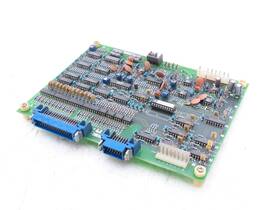
( Brand: Mitsubishi ), ( Manufacturer Part Number: ACSB-03-G ), ( Model: BY171A600G51 ), ( Part Type: Circuit Board Controller )
Review MITSUBISHI Cnc Pcb Printed Circuit Board Controller
The **Mitsubishi ACS-B03-G (BY171A600G51)** is a high-performance, industrial-grade CNC (Computer Numerical Control) printed circuit board (PCB) controller designed for precision machining, automation, and advanced manufacturing applications. Engineered by Mitsubishi Electric, a global leader in automation and control technology, this controller represents the pinnacle of reliability, flexibility, and integration capabilities, making it an ideal choice for manufacturers seeking seamless integration with Mitsubishi s robust servo and spindle systems. Built on a solid foundation of Mitsubishi s proven ACS (Advanced Control System) architecture, the **ACS-B03-G** combines cutting-edge processing power with intuitive programming interfaces, enabling users to achieve unparalleled levels of accuracy, repeatability, and efficiency in PCB drilling, routing, and milling operations. Its compact yet rugged design ensures durability in demanding industrial environments, while its compliance with international safety and performance standards guarantees consistent operation across diverse manufacturing settings.
At the heart of the **ACS-B03-G** lies a high-speed, real-time processing engine optimized for CNC applications, featuring advanced motion control algorithms that minimize vibration, reduce tool wear, and enhance surface finish quality. The controller supports a wide range of Mitsubishi servo motors and drives, including the **MITSUBISHI SERVO-DRIVES (e.g., MR-J4, MR-J3, or MR-J2)**, allowing for precise synchronization of multi-axis movements with sub-micron resolution, which is critical for high-density PCB fabrication. Its **BY171A600G51** firmware variant further enhances functionality by incorporating enhanced diagnostic tools, adaptive feed control, and support for high-speed data transfer protocols, ensuring smooth communication with CAM software, PLCs, and other automation systems. The controller s **G-code interpreter** is fully compliant with industry standards, including ISO 6983 and RS-274-D, enabling compatibility with virtually any CAD/CAM software suite, from industry giants like CAMWorks or Mastercam to specialized PCB design tools.
One of the standout features of the **ACS-B03-G** is its **user-friendly Human-Machine Interface (HMI)**, which can be customized via Mitsubishi s **GT Designer 3** or **GT Works3** software, allowing operators to configure screens, alarms, and control parameters with ease. This flexibility extends to its **programming capabilities**, where users can develop and edit CNC programs directly on the controller s touchscreen or via a PC, leveraging Mitsubishi s **MITSUBISHI CNC Programming Language (MCL)** for advanced logic control, macro programming, and conditional branching. Additionally, the controller supports **remote monitoring and diagnostics** through Ethernet or serial communication, enabling IT administrators to oversee machine health, log errors, and perform firmware updates without disrupting production. For collaborative environments, the **ACS-B03-G** integrates seamlessly with **Mitsubishi s iQ Works** or **MELSEC iQ** automation platforms, facilitating data exchange with PLCs, vision systems, and other smart factory technologies to create fully connected, Industry 4.0-ready manufacturing cells.
Beyond its technical prowess, the **ACS-B03-G** is engineered for **scalability and future-proofing**, accommodating expansions such as additional axes, high-speed spindle control, or integration with laser or waterjet systems. Its **high-speed bus architecture** ensures minimal latency between the controller, servo drives, and feedback sensors, which is essential for achieving rapid tool changes, high feed rates, and complex 3D contouring in PCB manufacturing. The unit also incorporates **built-in safety features**, including emergency stop overrides, axis homing routines, and collision detection, which help prevent costly downtime and ensure operator safety in high-speed machining environments. Whether deployed in a small-scale PCB prototyping lab or a large-scale production facility, the **Mitsubishi ACS-B03-G (BY171A600G51)** delivers a robust, all-in-one solution that bridges the gap between precision engineering and digital automation, empowering manufacturers to push the boundaries of what s possible in printed circuit board fabrication.
### **Pros and Cons of buying a Mitsubishi ACS-B03-G (BY171A600G51) CNC PCB Printed Circuit Board Controller**
#### **Pros**
1. **Compatibility with Mitsubishi CNC Systems** This controller is designed specifically for Mitsubishi CNC machines, ensuring seamless integration with existing or new systems. It supports a range of Mitsubishi CNC models, making it a reliable choice for users already in the Mitsubishi ecosystem.
2. **High Precision and Reliability** Mitsubishi is known for producing robust industrial controllers, and the ACS-B03-G is no exception. It delivers consistent performance in CNC machining, reducing errors in PCB drilling, routing, and milling operations.
3. **Advanced Control Features** The controller supports high-speed data processing, real-time feedback, and precise motion control, which are essential for accurate PCB manufacturing. It also includes features like adaptive feed control and toolpath optimization for better efficiency.
4. **Compatibility with Modern Software** The ACS-B03-G works well with CAM software such as Mastercam, Fusion 360, and other industry-standard programs, allowing for smooth workflow integration from design to machining.
5. **Durability and Longevity** Mitsubishi controllers are built to withstand harsh industrial environments, making this unit a long-term investment for businesses involved in PCB production.
6. **Support for High-Speed Machining** The controller can handle rapid movements and high-speed operations, which is beneficial for increasing productivity in PCB fabrication.
7. **Easy Integration with Existing Systems** If you already have Mitsubishi CNC machines, this controller can be retrofitted or paired with new equipment without major compatibility issues.
---
#### **Cons**
1. **High Initial Cost** Mitsubishi controllers are premium products, and the ACS-B03-G is no exception. The upfront cost may be prohibitive for small businesses or hobbyists operating on tight budgets.
2. **Limited Availability of Parts and Support** Compared to more widely used brands like Fanuc or Siemens, Mitsubishi parts and technical support may be harder to find, especially in regions where Mitsubishi is less dominant. This could lead to longer downtimes if maintenance or replacements are needed.
3. **Complexity for Beginners** Mitsubishi CNC systems are known for their advanced features, which can be overwhelming for users without prior experience in CNC programming or Mitsubishi-specific controls. A learning curve exists, particularly in setting up and troubleshooting the controller.
4. **Software Dependency** While the controller itself is robust, its full functionality relies on compatible CAM software and proper programming. Users may need to invest in additional software licenses or training to maximize its potential.
5. **Potential for Overkill in Small-Scale Operations** If you are running a small-scale PCB production operation with minimal complexity, the advanced features of the ACS-B03-G may be unnecessary, making a more budget-friendly alternative more practical.
6. **Firmware and Updates** Mitsubishi occasionally releases firmware updates to improve performance or add features. However, accessing and installing these updates may require technical expertise, and some users report occasional compatibility issues with newer versions.
7. **Limited Open-Source or Third-Party Support** Unlike some other CNC controllers that have strong open-source communities (e.g., LinuxCNC), the ACS-B03-G lacks extensive third-party modifications or community-driven improvements, which could limit customization options.
---
### **Conclusion**
The Mitsubishi ACS-B03-G (BY171A600G51) CNC PCB controller is a high-performance, reliable, and precise choice for users deeply integrated into the Mitsubishi CNC ecosystem. It excels in environments where accuracy, speed, and long-term durability are critical, such as professional PCB manufacturing shops or industrial settings. However, its high cost, complexity, and potential support challenges make it less ideal for hobbyists, small businesses, or users seeking a more budget-friendly or open-source solution.
For businesses already using Mitsubishi CNC machines or those prioritizing precision and reliability above all else, this controller is a strong recommendation. For others, especially those with limited budgets or experience, exploring alternatives like Fanuc, Siemens, or even open-source controllers (with appropriate compatibility checks) may be more practical.
### **Recommendation**
- **Buy the Mitsubishi ACS-B03-G if:**- You are already using Mitsubishi CNC machines and need a compatible, high-performance controller.
- Your operation requires precision, speed, and long-term reliability in PCB fabrication.
- You have the budget to invest in a premium industrial controller and access to technical support.
- You are willing to invest time in learning Mitsubishi-specific CNC programming.
- **Consider Alternatives if:**- You are operating on a tight budget and can find a similarly capable controller at a lower cost.
- You lack experience with Mitsubishi systems and prefer a more user-friendly or widely supported brand.
- Your PCB production scale is small, and you do not require the advanced features of this controller.
- You prioritize open-source flexibility or third-party modifications over proprietary systems.
Ultimately, the decision should align with your specific needs, budget, and long-term goals in CNC PCB manufacturing.
Details:
And the cost of return shipping. Items in Lot1. Ask our experts. Shipping Dimensions: length 8 in.
Condition Used. Model BY171A600G51. Part Number ACSB-03-G. Country of Manufacture/A.
part #: acsb03 prices
- $74.99-$170.05
specifications variablfrequen:
- brand: Mitsubishi
- mpn: Acsb-03-g
- model: By171a600g51
- part type: Circuit Board Controller
general variablfrequen:
- condition: Used
- Drives Starters > Drives Motor Controls > Variable Frequency Drives
payments variablfrequen:
- other
- credit card: Discover
- wallet: Google-pay
offer variablfrequen:
- sold: 0
- quantity: 1
- best offers: True
- started: March 24, 2026
- availability: In Stock
- options: Ship-to-home
shipping variablfrequen:
- class: Expedited
- cost: $0.00
- service: Expedited
- transit: 2-6 Days
- type: Fixed
returns variablfrequen:
- paid by: Buyer
- method: Money back
- time: 30 Days
- policy: Returns Accepted
seller variablfrequen:
- city: Millersburg, Indiana
- rating: 99.9%
- # reviews: 18637
Mitsubishi ACSB-03 Is Similar To:
- Bc186a237g52a Mitsubishi Electric Board For Frequrol Drive (40.9% similar) Known good unit Mitsubishi electric control board for a drive model: FR-A024-1. May not apply to some obsolete units ship us your defective equipment. Have an emergency...(February 6th, 2019)
- Fr-a5nr Mitsubishi Serial Communication Board (40.3% similar) Between 9AM - 4PM est. Please on the calculate shipping button below for quotes. Order processing buyer to pay all ups shipping costs. Electrical excess will contact you with the shipping cost and totals after offer ends. Today for more details about our repair procedures and capabilities. Item ...(July 8th, 2017)
- Fr-sf-2-26k Mitsubishi Ac Spindle Controller (47.5% similar) Mitsubishi FR-SF-2-26K ac spindle controller freckle fr-sf FRSF226K PRF9 manufacturer: model: FR-SF-2-26KTYPE: used, in working condition. This item is used...(March 19th, 2017)
- Fx2n-2da Mitsubishi Electric New Melsec Drive Programmable Controller Nib (42.2% similar) Mitsubishi melees programmable controller catalog number: FX2N-2DA each programmable is new and guaranteed to be in working condition...(April 30th, 2019)
- Fcu6-dx561 Mitsubishi Reconditioned Controller Mori Seiki (42.7% similar) Refurbished by Mitsubishi. Mitsubishi FCU6 DX561. Actual pictures. In factory recon box...(March 30th, 2016)
- Mr-j4-70b Mitsubishi Servo Drive Amplifier Controller (47.2% similar) ...(December 4th, 2018)
- Mr-s1-100-e01 Mitsubishi Cnc Servo Drive (29.8% similar) Mitsubishi MR-S1-100-E01 cnc servo drive MRS1100E01 SL34 manufacturer: model: MR-S1-100-E01TYPE: used, in working condition. This item is used...(July 12th, 2017)
- Mr-s1-200-e01 Mitsubishi Cnc Servo Drive (29.8% similar) Mitsubishi MR-S1-200-E01 cnc servo drive BN624E763G51 RFC MRS1200E01 PRF8 manufacturer: model: MR-S1-200-E01TYPE: used, in working condition. This item is used...(March 23rd, 2017)
- Mr-s1-200-e31 Mitsubishi Cnc Servo Drive (29.8% similar) Mitsubishi MR-S1-200-E31 cnc servo drive MRS1200E31 PRF13 manufacturer: model: type: used, in working condition. This item is used...(March 13th, 2017)
- Mr-s11-080-e01 Mitsubishi Cnc Servo Drive (29.6% similar) This item is used. Mitsubishi MR-S11-080-E01 cnc servo drive RG101C C1N634E283G51B MRS11080E01 PRC2 manufacturer: model: MR-S11-080-E01TYPE: used, in working condition...(April 24th, 2017)
- Mr-s11-200-e01 Mitsubishi Cnc Servo Drive Rg101c (27.9% similar) Mitsubishi MR-S11-200-E01 cnc servo drive RG101C C1N634E283G51C MRS11200E01 PRC1 manufacturer: model: MR-S11-200-E01TYPE: used, in working condition. This item is used...(February 23rd, 2017)